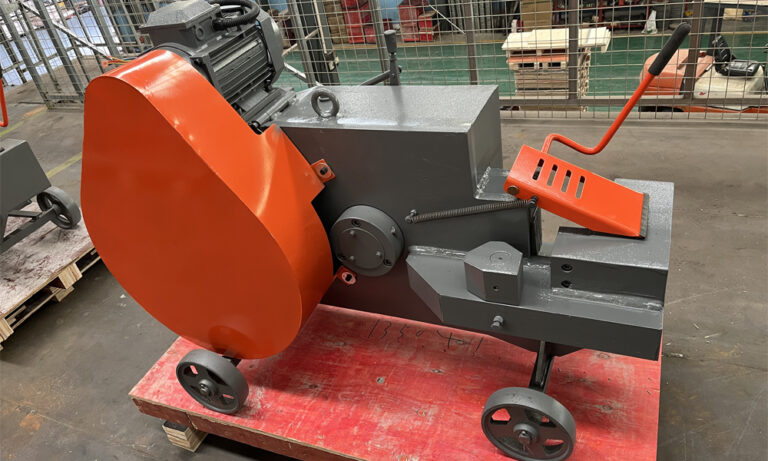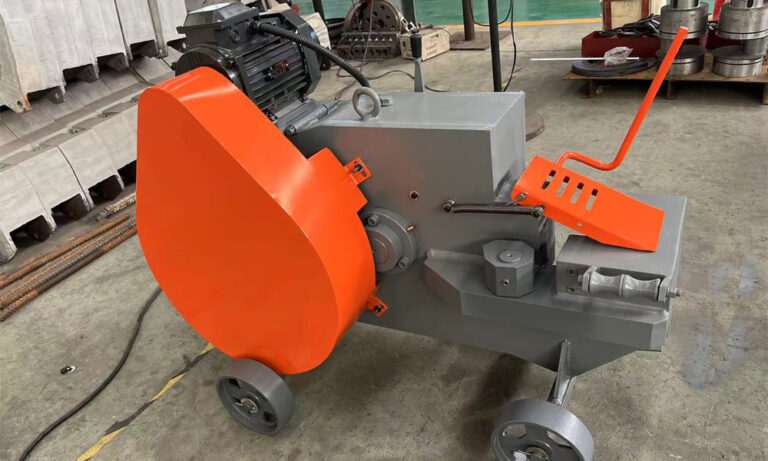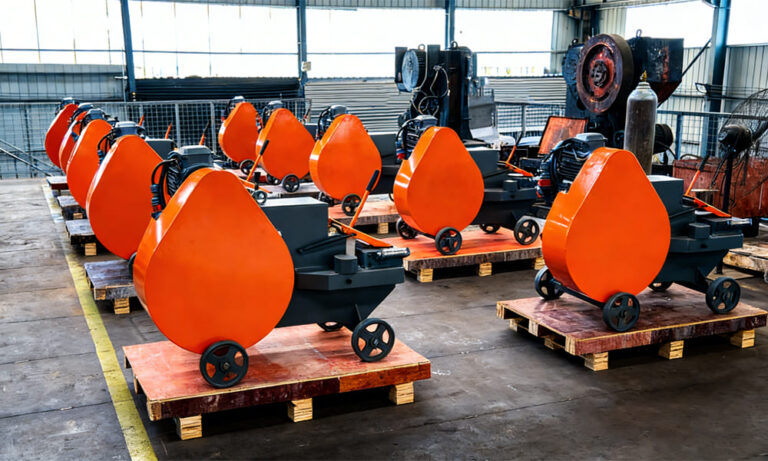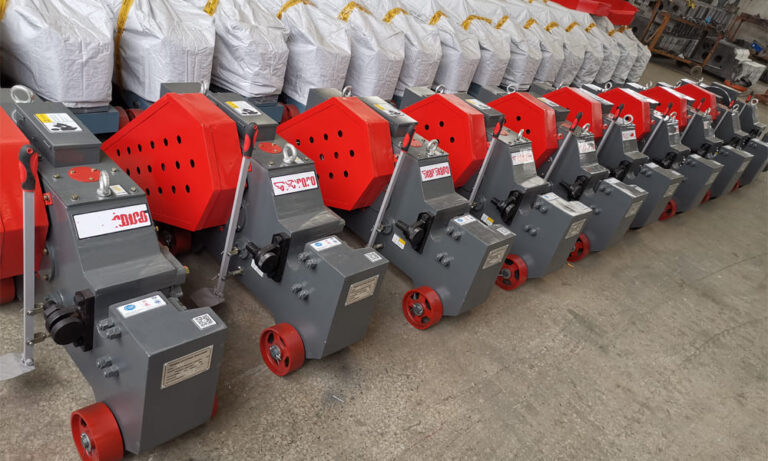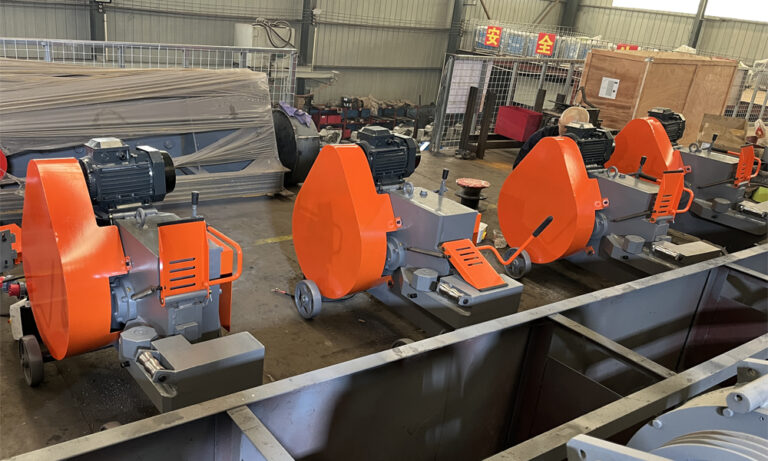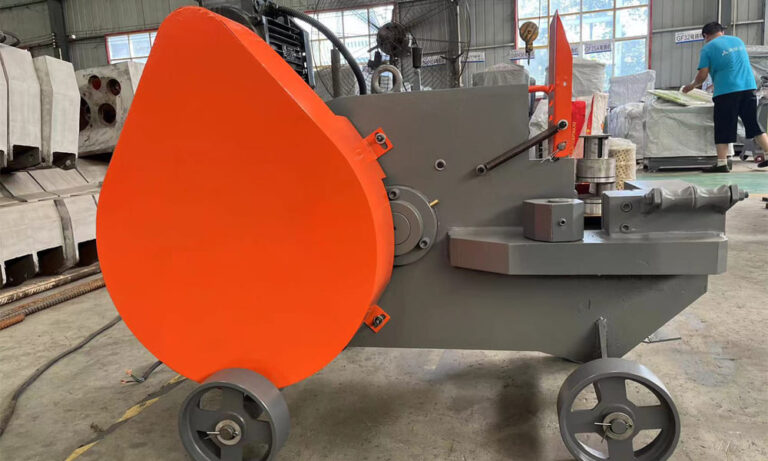
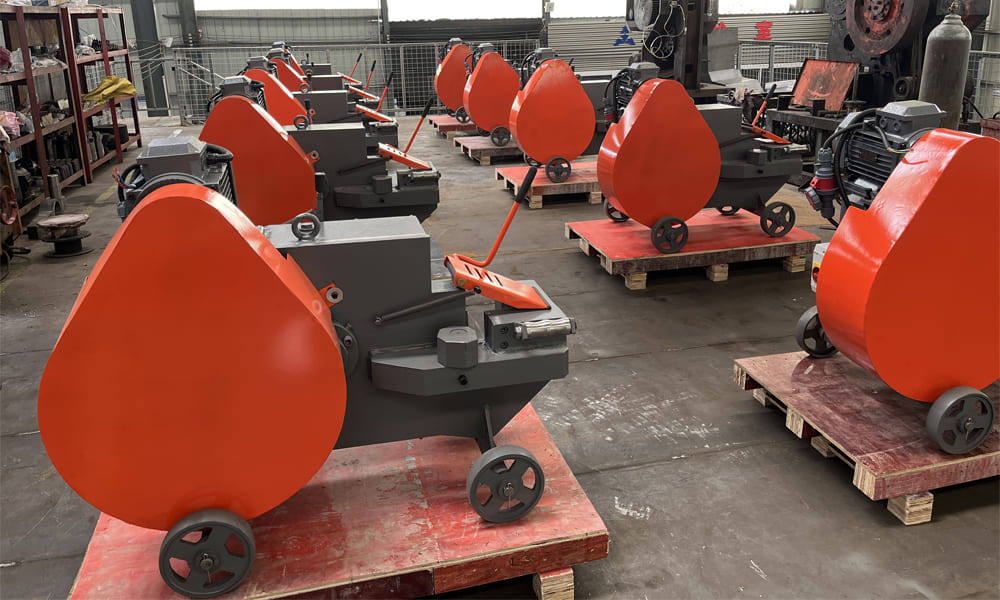
Determining how long a C52 Steel Bar Cutter will operate effectively depends less on calendar years and more on the total amount of steel it can process. In professional construction environments, this measurement—known as cutting tonnage—is the most reliable indicator of machine durability.
1. Measuring Longevity: Cutting Capacity, Not Years
Rebar cutters are engineered with a specific output range in mind:
-
Basic or light-duty cutters are often built for roughly 10,000 tons of total cutting volume.
-
Medium to premium-grade cutters commonly exceed 20,000 tons, offering a significantly longer operational window.
To visualize this metric:
If a machine processes 10 tons per day, operating 250 working days per year, its annual output reaches:
2,500 tons / year
Under this workload, a unit designed for 20,000 tons could, in theory, operate for:
20,000 ÷ 2,500 ≈ 8 years
This figure, however, is only a baseline. Real-world performance varies with maintenance habits, operator skill, and operating environment.
2. What Determines the Lifespan of a Rebar Cutter?
A. Construction Quality and Engineering
The machine’s durability begins with its internal structure:
-
High-strength alloys in gears and shafts enhance wear resistance
-
Heat-treated blades withstand repeated impact
-
Rigid steel frames prevent distortion during heavy-duty operation
-
Precision manufacturing minimizes mechanical stress and prolongs component life
Different cutting systems also influence how long the machine lasts:
-
Hydraulic units operate smoothly with minimal shock loads
-
Mechanical crank-based cutters deliver high efficiency but require more vigilant upkeep due to stronger impact forces
B. Operational Conditions and Daily Use
Maintenance has the largest influence on lifespan—more than any other factor.
Key care requirements
-
Proper lubrication keeps gears and bearings from overheating
-
Sharp and correctly aligned blades reduce unnecessary strain
-
Regular cleaning removes debris that can accelerate wear
-
Routine checks identify loose bolts, misalignment, or abnormal vibration
Workload behavior
-
Cutting steel beyond the rated diameter
-
Continuous heavy load without rest intervals
-
Rough operation or improper feeding techniques
Environmental exposure
Dust, moisture, and corrosive surroundings shorten lifespan unless the machine is shielded or cleaned consistently.
3. How Rebar Cutters Show Their Age
Performance decline happens gradually. Common warning signs include:
-
Cuts becoming uneven, rough, or misaligned
-
Increase in vibration, noise, or overheating
-
Excessive wear in bearings, gears, or crank components
-
Visible deformation, cracking, or loss of structural rigidity
-
Repair frequency rising to the point that servicing becomes uneconomical
When these symptoms appear regularly, the machine is nearing the end of its effective service life.
4. Ways to Prolong the Working Life of a C52 Steel Bar Cutter
A well-managed machine will always outperform one that is neglected. To extend longevity:
-
Choose a model rated above your everyday cutting diameter
-
Follow scheduled lubrication, cleaning, and blade adjustments
-
Train operators to use the equipment correctly
-
Replace worn parts with original-spec or high-grade alternatives
-
Ensure the equipment stays clean, dry, and protected from harsh conditions
Final Insight
With reasonable workloads and consistent maintenance, a quality rebar cutter can remain productive for eight years or longer. Machines pushed beyond their limits or poorly maintained may deteriorate in as little as two to three years.