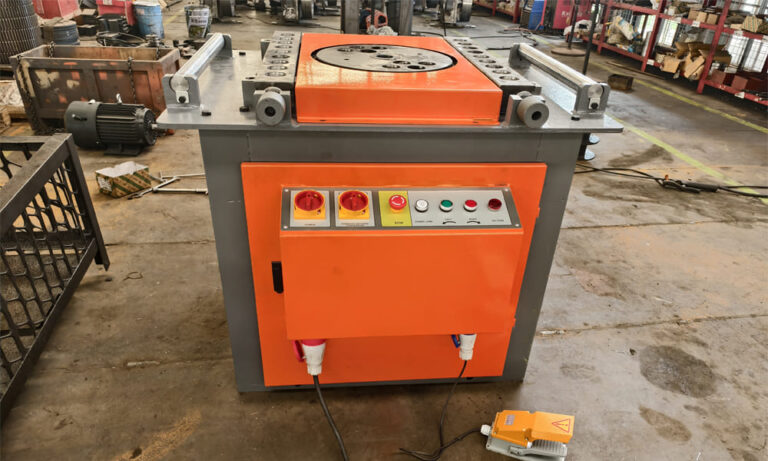
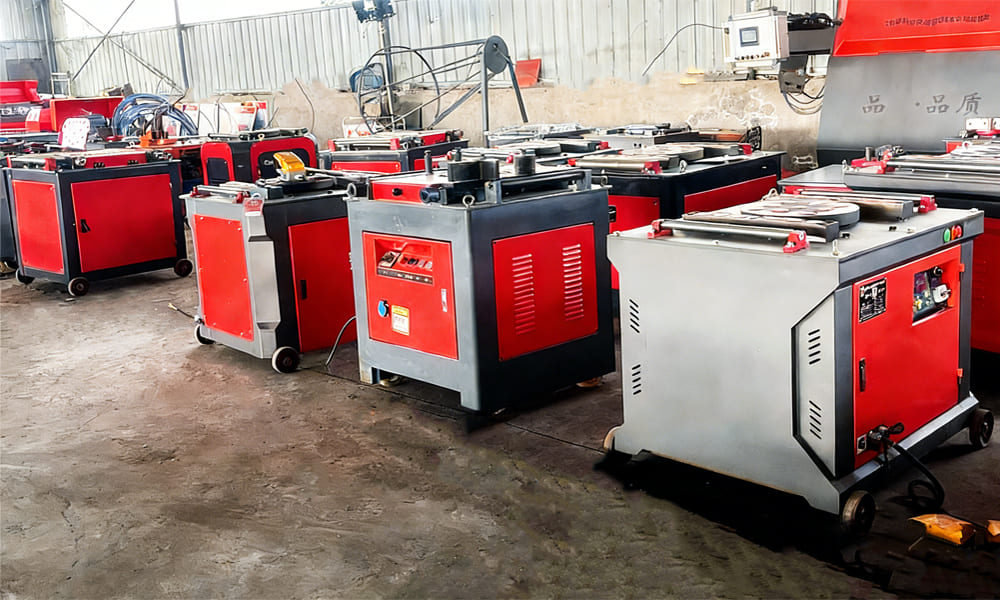
Angle regulation is a core technical element in P52 Rebar Bending Machine, directly affecting bending accuracy, production efficiency, and on-site adaptability. This section compares two widely used angle control solutions—mechanical limit systems and electronic sensor-based control—to help GHM Machinery’s global customers choose the most suitable configuration for their specific operating conditions.
1. Mechanical Limit Control (Conventional Stop System)
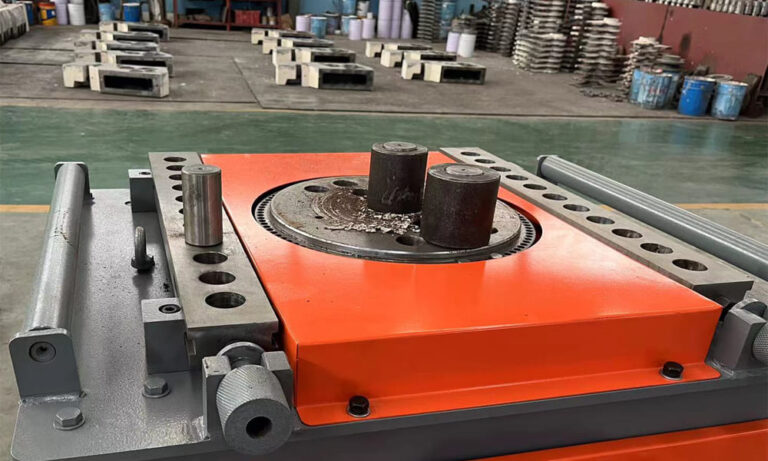
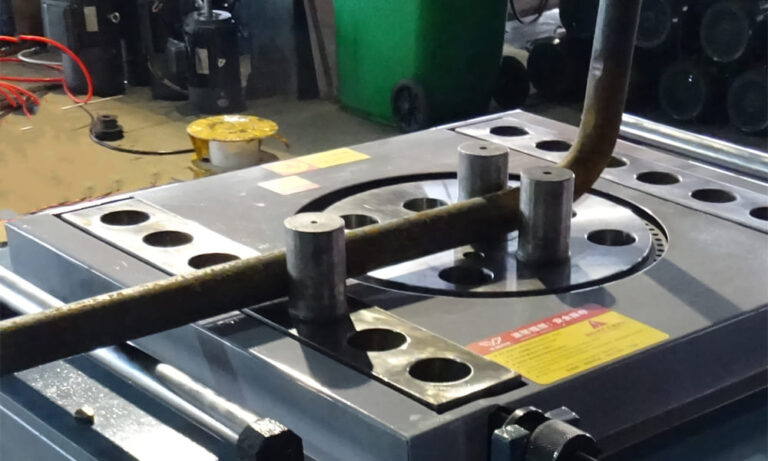
The mechanical limit system controls bending angles through a fixed physical stop installed on the rotating bending mechanism. When the bending arm reaches the preset position, it contacts the stop plate, and mechanical resistance immediately halts further rotation, defining the final bend angle.
Key Strengths
Simple Design and Low Cost
Built from basic components such as stop plates, bolts, and mounting brackets, this system is economical to produce and maintain. It is well suited for entry-level machines and applications with straightforward bending requirements.
Stable Performance in Harsh Environments
Because it relies entirely on mechanical contact, the system is immune to power fluctuations, temperature changes, and electromagnetic interference. It operates reliably in dusty, humid, or high-vibration job sites with minimal risk of failure.
Straightforward Operation and Maintenance
Angle adjustment is achieved by manually repositioning the stop plate, a process that requires no specialized skills. Routine maintenance is limited to basic cleaning and lubrication, keeping long-term servicing costs low.
Limitations
Restricted Accuracy
Mechanical tolerances, assembly deviations, and gradual wear limit angle precision, typically to a range of ±1° to ±2°. This level of accuracy may not meet the requirements of precision-driven projects such as bridges or high-rise structures.
Limited Adjustment Efficiency
Any angle change requires physical repositioning of the stop, which can be time-consuming. Fine, incremental tuning is difficult, reducing efficiency in projects involving frequent angle variations.
No Data Feedback Capability
The system provides no digital feedback or production records. Angle drift caused by wear may remain undetected, increasing the risk of material waste and rework.
2. Electronic Sensor-Based Angle Control System
Advanced P52 Rebar Bending Machine utilize electronic sensing technology—such as rotary encoders—to continuously detect the bending arm’s position. These signals are processed by a PLC, which precisely stops the machine once the programmed angle is reached.
Key Strengths
Superior Bending Precision
Real-time sensing enables angle control typically within ±0.1° to ±0.5°, supporting strict construction standards and high-accuracy reinforcement processing while improving overall material utilization.
Flexible and Programmable Operation
Operators can set and modify bending angles directly through a control panel or touchscreen. Rapid angle switching significantly improves productivity, particularly for complex or multi-angle bending tasks.
Production Data and Process Visibility
The system automatically records critical information such as achieved angles, output quantities, and cycle durations. This data supports quality tracking, job management, and early detection of deviations.
Automation Integration Capability
Sensor-based control systems can be seamlessly combined with automated feeding, bending, and unloading equipment, enabling fully automated rebar processing lines with reduced labor input and improved consistency.
Limitations
Higher Initial and Maintenance Costs
The use of precision sensors, PLCs, and human–machine interfaces increases manufacturing and maintenance expenses. Troubleshooting and repairs require trained technical personnel.
Sensitivity to Operating Conditions
Electronic components may be affected by heavy dust, moisture, temperature extremes, or strong electromagnetic fields if not adequately protected, potentially impacting reliability in severe outdoor environments.
Higher Operator Skill Requirement
Effective use of the system requires operator training for parameter setup, data interpretation, and basic diagnostics, adding to initial implementation costs.
3. Application-Based Selection Guidance
Mechanical stop systems are an effective choice for small to mid-sized projects, cost-focused operations, or applications where ultra-high accuracy is not essential. Their durability, simplicity, and low ownership cost make them practical for many standard construction tasks.
Electronic sensor-based systems are better suited for large-scale projects, precision fabrication, and users seeking higher efficiency, repeatability, and digital process control. While they involve higher upfront investment, they deliver clear advantages in accuracy, productivity, and automation readiness.
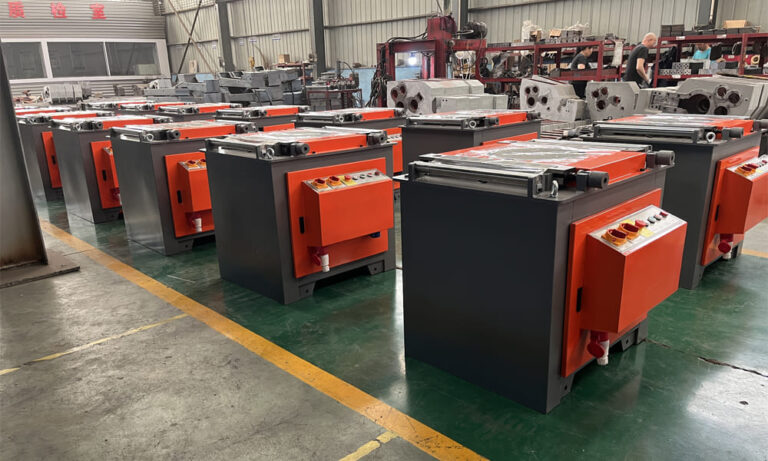
GHM Machinery supplies P52 Rebar Bending Machine equipped with both control options, allowing customers worldwide to select the most appropriate balance between cost efficiency and performance to meet diverse construction requirements.