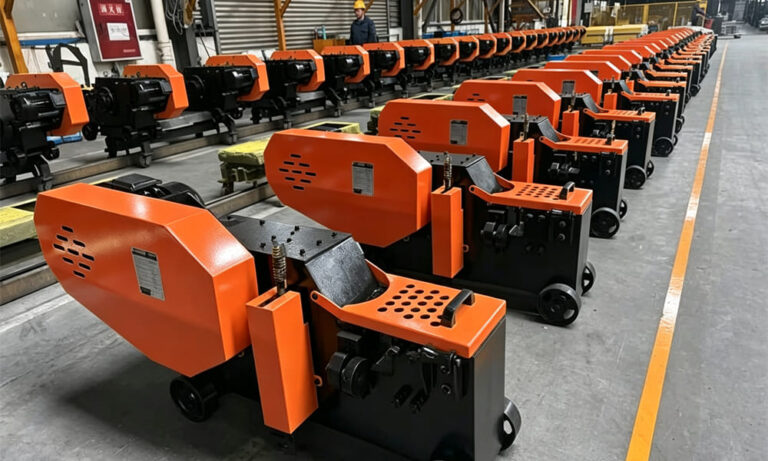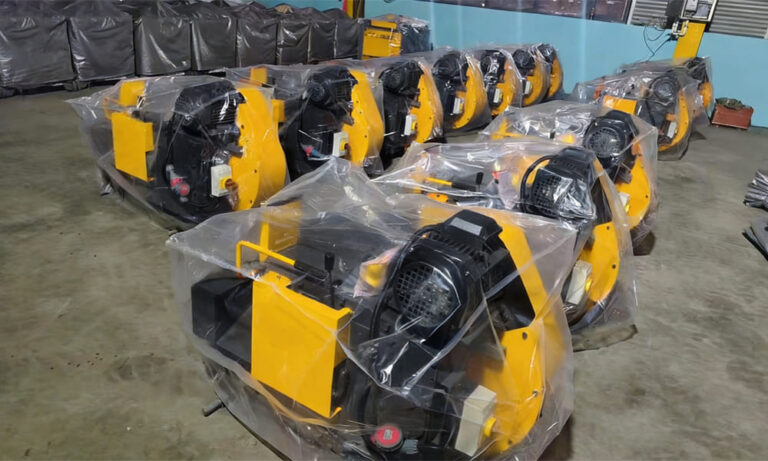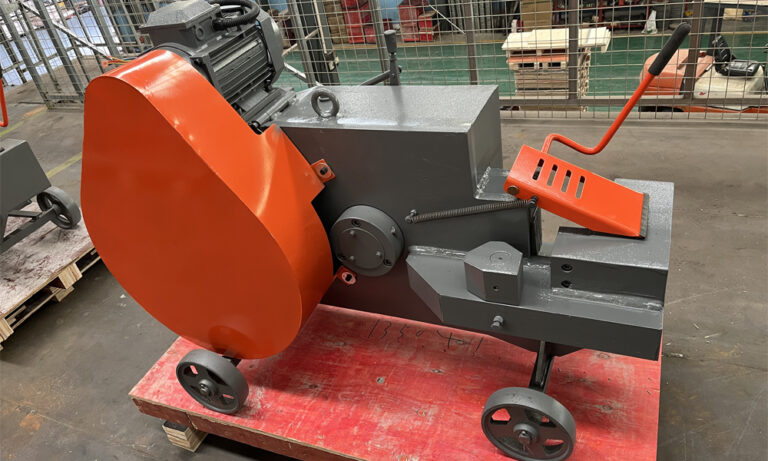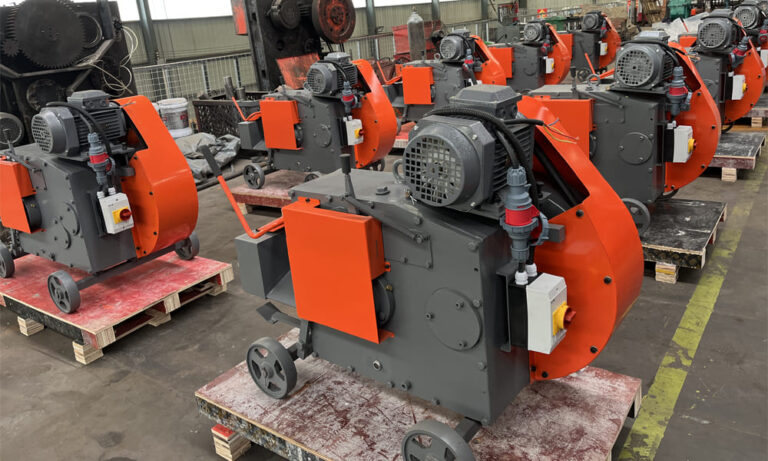
The gearbox is one of the most important transmission components in a rebar cutting machine gearbox. It transfers power from the motor to the cutting mechanism and directly affects cutting force, operating noise, durability, and overall machine reliability. Among the different gear designs used in gearboxes, helical gears and spur gears are two common choices.
Helical Gears: Smooth and Heavy-Duty Transmission
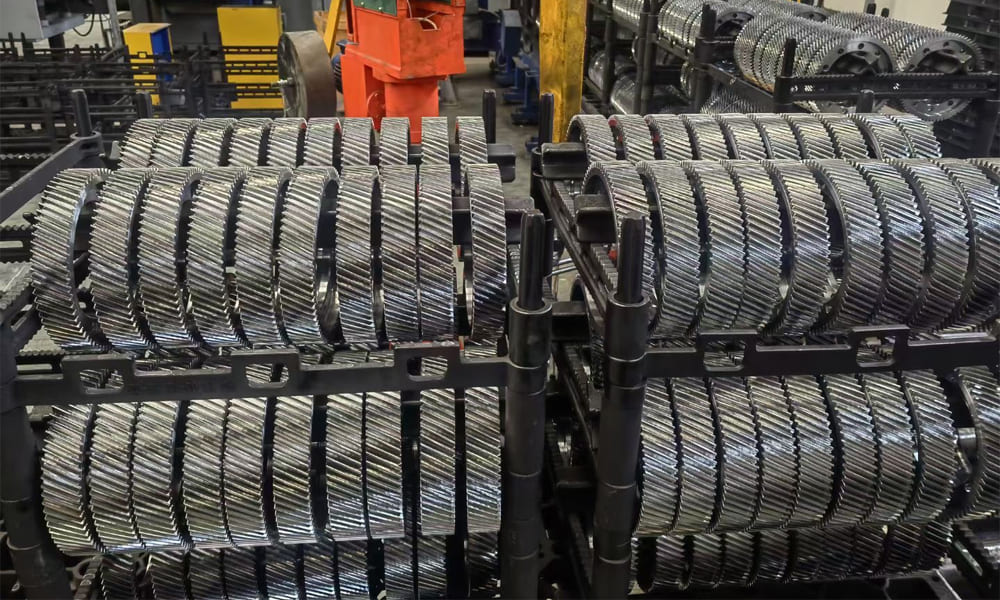
Helical gears have teeth that are cut at an angle to the gear axis. Unlike spur gears, their teeth engage gradually rather than making full contact at once. This provides smoother power transmission and helps reduce vibration and operating noise.
For a heavy-duty rebar cutting machine, this gradual engagement is particularly useful. When cutting thick or high-strength reinforcement bars, the gearbox may experience substantial and rapidly changing loads. Helical gears can distribute these loads over multiple teeth, reducing impact forces and improving gear service life.
Another advantage is their high load-carrying capacity. With suitable material, heat treatment, lubrication, and precision machining, helical gears can provide reliable performance under demanding working conditions.
However, helical gears also generate axial thrust because of their angled teeth. Therefore, the gearbox needs appropriate bearings and a properly designed lubrication system. Manufacturing is also generally more complex than for spur gears.
Spur Gears: Simple and Cost-Effective
Spur gears have straight teeth parallel to the gear axis. Their simple structure makes them relatively easy to manufacture, install, and maintain. They are also efficient for many basic mechanical transmission applications.
For some rebar cutting machines, spur gears can provide a practical and economical transmission solution. Their straightforward design can reduce manufacturing costs and simplify maintenance.
The main limitation is that spur gears engage teeth more abruptly. Under heavy and fluctuating cutting loads, this can result in greater impact, vibration, and noise compared with a properly designed helical gear system. For machines frequently processing large-diameter rebar, this factor should be carefully considered.
Which Gear Is Better for a Rebar Cutting Machine?
There is no universal answer. The best choice depends on the machine’s cutting capacity, motor power, gearbox structure, transmission ratio, operating frequency, and target price.
For heavy-duty rebar cutting machines, helical gears are often advantageous when smooth operation, high load capacity, lower vibration, and long-term durability are priorities. Spur gears remain attractive where simplicity, easy maintenance, and cost efficiency are more important.
Ultimately, gear quality depends not only on whether the design is helical or spur. Gear material, heat treatment, machining accuracy, bearing selection, lubrication, housing rigidity, and overall gearbox design are equally important.
A well-designed gearbox can significantly improve the cutting performance, service life, and reliability of a rebar cutting machine.